Canary Islands Holidays from the UK: Which Island to Choose and Booking Guide 2026

Why the Canary Islands Are Perfect for UK Holidays
The Canary Islands offer UK travellers year-round sunshine, stunning beaches, volcanic landscapes, and excellent value—all within a four-hour flight. This Spanish archipelago off the coast of West Africa combines European accessibility with subtropical climate, making it one of Britain's most popular winter sun destinations. With seven main islands each offering distinct character and attractions, choosing the right one maximises your holiday experience.
The Canaries' volcanic origins created dramatic black sand beaches, otherworldly landscapes, and microclimates that support everything from desert dunes to cloud forests. Temperatures average 20-24°C year-round, with minimal rainfall from November to March—the peak season for UK visitors escaping British winter. Package holidays, direct flights from numerous UK airports, and the security of being part of Spain (using euros, EU consumer protection) make the Canaries accessible and straightforward.
Tenerife: The All-Rounder with Something for Everyone
Tenerife, the largest Canary Island, attracts more UK visitors than any other, offering the broadest range of experiences. The sunny south coast features purpose-built resorts like Playa de las Américas and Los Cristianos—perfect for families wanting guaranteed sunshine, water parks, and bustling nightlife. The quieter Costa Adeje appeals to couples and those seeking higher-end hotels and golf courses.
Northern Tenerife presents a completely different character—greener, more Spanish, and culturally richer. Puerto de la Cruz retains traditional Canarian architecture, botanical gardens, and authentic local restaurants. The island's interior rewards exploration: Spain's highest peak Mount Teide (3,718m) dominates a UNESCO World Heritage national park accessible by cable car, offering lunar landscapes and, on clear days, views across multiple islands. For more family-friendly beach destinations, see our Spain mainland holiday guide.
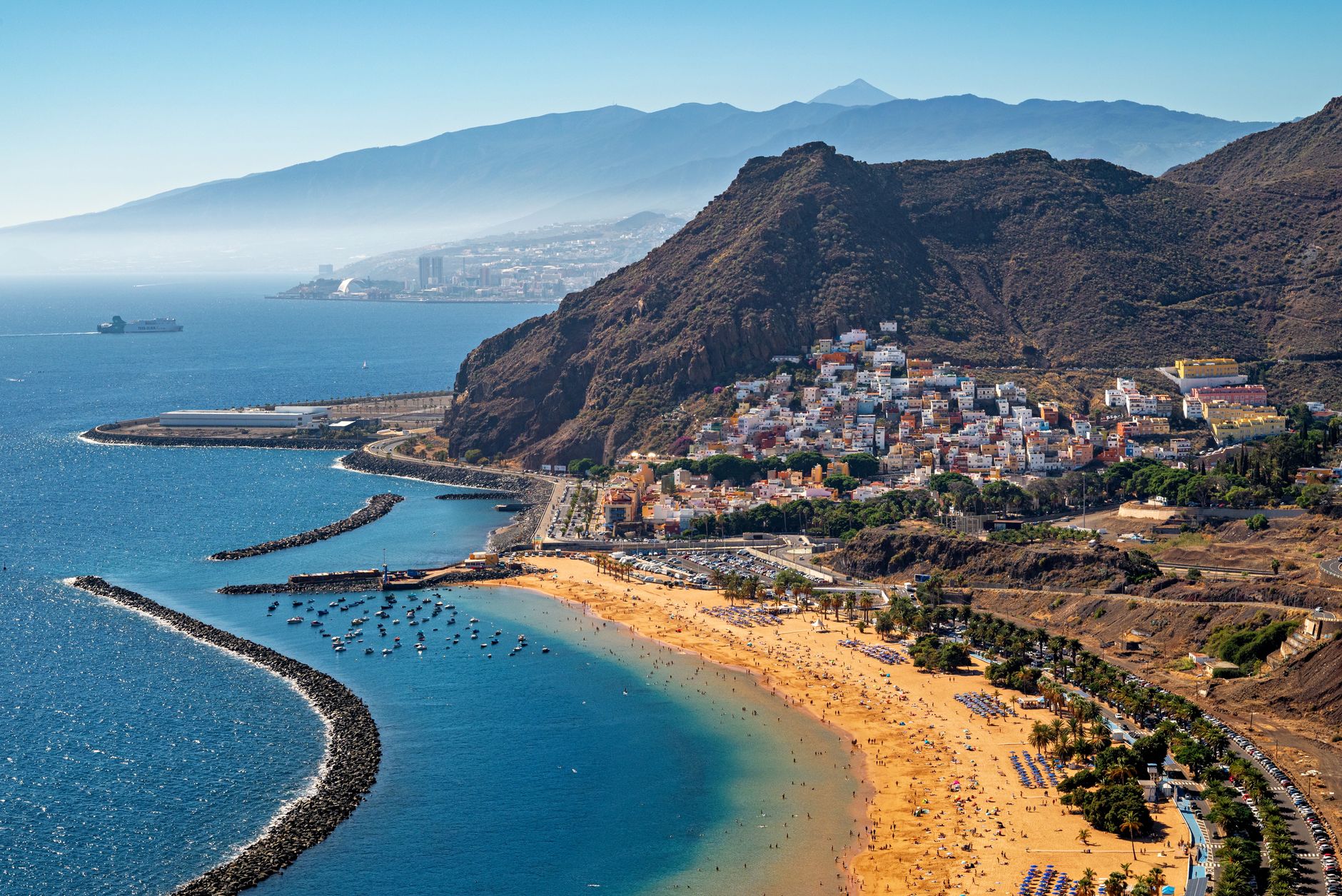
Best for: First-time Canary Island visitors, families with children, couples wanting variety, active holidaymakers. Tenerife delivers reliable sunshine, extensive hotel options across all budgets, excellent infrastructure, and day trips ranging from whale watching to hiking.
Lanzarote: Otherworldly Landscapes and Artist-Designed Attractions
Lanzarote's volcanic landscape sets it apart—the 1730s eruptions that covered a quarter of the island created a stark, beautiful terrain of black lava fields, red-rock formations, and volcanic cones. Artist César Manrique transformed these dramatic backdrops into attractions that blend seamlessly with nature: the Jameos del Agua cave system, Mirador del Río viewpoint, and Cactus Garden showcase his vision of sustainable development.
Timanfaya National Park demonstrates the island's volcanic power—guides cook food using geothermal heat and camel rides traverse Mars-like landscapes. Beach lovers favour Playa Blanca in the south (whitest sand, calmest waters) and the surf town of Famara in the north. Puerto del Carmen offers the island's busiest resort atmosphere with plenty of restaurants and bars along the promenade.
Lanzarote receives less rainfall than other Canary Islands, ensuring consistently dry weather. The island's compact size (60km long) makes it easy to explore by rental car, with most attractions reachable within 30-40 minutes. Wine enthusiasts should visit the UNESCO-protected La Geria wine region, where vines grow in volcanic ash pits—the resulting wines are distinctive and excellent value.
Best for: Couples, repeat Canary Island visitors wanting something different, photographers, wine lovers, active travellers who appreciate unique landscapes. Less suited to young families due to limited soft sand beaches and fewer dedicated children's attractions than Tenerife.
Fuerteventura: Beach Paradise for Surfers and Sun Worshippers
Fuerteventura boasts the Canaries' best beaches—over 150km of coastline featuring golden and white sand, turquoise waters, and consistent wind that draws surfers, windsurfers, and kitesurfers from across Europe. The island receives the least rainfall and enjoys the most sunshine hours, making it ideal for pure beach holidays.

The main resorts—Corralejo in the north and Costa Calma / Jandía in the south—cater primarily to sun-seekers and water sports enthusiasts. Corralejo offers lively nightlife, proximity to the stunning natural park with sand dunes resembling the Sahara, and ferry connections to tiny Lobos Island for hiking and snorkeling. The south features longer, wider beaches perfect for long walks and relaxation.
Fuerteventura's interior presents barren, desert-like landscapes—beautiful in their starkness but offering limited cultural attractions compared to other islands. This makes it perfect for those prioritising beach time, water sports, and relaxation over sightseeing and nightlife. The island's quieter atmosphere appeals to couples and mature travellers seeking peace.
Best for: Beach lovers, water sports enthusiasts (especially surfers and kitesurfers), couples seeking tranquility, anyone wanting guaranteed sunshine and minimal crowds. Less suitable for families with young children wanting entertainment options or those seeking cultural activities and nightlife.
Gran Canaria: The Miniature Continent
Gran Canaria earns its "miniature continent" nickname through remarkable diversity packed into a circular island 50km across. The south coast resort of Playa del Inglés and adjoining Maspalomas (famous for its spectacular sand dunes) provide classic beach holiday infrastructure—high-rise hotels, shopping centres, water parks, and vibrant nightlife.
But venture inland or north and you'll discover a completely different island: the UNESCO Biosphere Reserve interior features dramatic ravines, palm-filled valleys, and mountain villages seemingly untouched by tourism. The capital Las Palmas combines historic Vegueta quarter, excellent museums, and Playa de las Canteras—one of Europe's best city beaches.
Puerto de Mogán, nicknamed "Little Venice" for its waterfront canals, offers a more refined resort atmosphere with boutique hotels and upmarket restaurants. The interior village of Tejeda, surrounded by volcanic peaks, provides spectacular hiking. Gran Canaria's microclimates mean it can be sunny at the beach while cloudy in the mountains—pack layers for inland excursions. For other diverse destinations, explore our Portugal holiday guide.
Best for: Holidaymakers wanting beach relaxation with option for cultural exploration, LGBTQ+ travellers (Gran Canaria is notably welcoming), families wanting variety, repeat visitors who've done Tenerife. The island satisfies diverse group interests—beach lovers and culture seekers can both find happiness.
La Palma, La Gomera, and El Hierro: The Quiet Islands
The three smallest inhabited Canary Islands attract independent travellers, hikers, and those seeking authentic island life away from mass tourism. La Palma, "La Isla Bonita," features spectacular volcanic landscapes, UNESCO Biosphere Reserve status, and some of Europe's clearest night skies (stargazing tours are popular). Hiking through laurel forests and along volcanic ridges rewards with dramatic coastal views.
La Gomera, accessible by ferry from Tenerife, preserves ancient laurel forests in Garajonay National Park (UNESCO World Heritage) and unique whistling language "Silbo Gomero." The island's terraced hillsides, black sand beaches, and tranquil atmosphere appeal to nature lovers and those wanting complete escape from tourist crowds.
El Hierro, the smallest and most remote, attracts divers (pristine marine reserve), eco-tourists (100% renewable energy goal), and travellers seeking total peace. Limited accommodation and flights ensure it remains quiet—perfect for digital detox but unsuitable for those wanting resort amenities or variety.
Best for: Independent travellers, hikers, nature enthusiasts, repeat Canary Island visitors wanting new experiences, those seeking authentic island culture. Not suited for beach holidays, families with young children, or those wanting guaranteed sunshine (these islands are greener and cloudier than eastern islands).
Weather and Best Times to Visit
The Canaries' "eternal spring" climate makes them year-round destinations, but timing affects your experience. November to March brings peak UK visitor numbers escaping British winter—temperatures average 20-22°C, perfect for beach days without intense heat. This period sees higher prices and fuller resorts but still feels spacious compared to Mediterranean summer crowds.
April to October offers hotter weather (25-29°C), quieter resorts, and better value. July-August sees some European family crowds but nothing like mainland Spain. September-October provides ideal conditions—warm seas, fewer visitors, and competitive prices. December-February occasionally brings rain (mainly to northern coasts and western islands), but southern resort areas remain largely dry.
Wind is a factor, especially on eastern islands (Fuerteventura, Lanzarote) in summer—the "alisios" trade winds keep temperatures comfortable but can feel strong on exposed beaches. This same wind creates perfect conditions for water sports. Western islands (La Palma, El Hierro, La Gomera) are greener year-round but see more cloud cover, especially in winter months.
Practical Tips for Choosing Your Canary Island
For guaranteed winter sun and activities: Tenerife or Gran Canaria—both offer insurance against rare rainy days with museums, shopping, and attractions beyond the beach.
For pure beach relaxation: Fuerteventura delivers the best beaches and most sunshine but limited alternatives if you tire of sand and sea.
For unique landscapes and culture: Lanzarote combines striking volcanic scenery with Manrique's artistic legacy and excellent wine.
For active holidays and nature: La Palma, La Gomera, or northern Tenerife provide hiking trails, forests, and dramatic scenery.
For nightlife and gay-friendly atmosphere: Gran Canaria's Playa del Inglés and Maspalomas area, or Tenerife's Playa de las Américas.
Getting There and Getting Around
Direct flights connect the four main Canary Islands (Tenerife, Gran Canaria, Lanzarote, Fuerteventura) with numerous UK airports. Flight time averages 4-4.5 hours. Tenerife South Airport serves southern resorts while Tenerife North serves Puerto de la Cruz and the capital. Book direct flights to your chosen island—island-hopping via ferry or inter-island flights adds time and expense unless you're planning a multi-island trip.
All islands have reliable bus networks, but rental cars provide freedom to explore beyond resort areas. Roads are generally excellent. Taxis are affordable for airport transfers and short journeys. Many package holidays include airport transfers—confirm when booking. For those interested in multi-destination trips, see our cruise holiday guide featuring Atlantic island itineraries.
Booking Your Canary Islands Holiday
Package holidays combining flights and accommodation offer best value, ATOL protection, and simplicity. Last-minute deals can be exceptional, especially outside peak seasons, but booking 2-3 months ahead secures better hotel choice and flight times. All-inclusive options suit families and those wanting budget certainty, while self-catering apartments work for longer stays and those preferring flexibility.
Your personal travel consultant accesses trade rates often unavailable to public, tailors packages to your preferences (villa with pool vs beachfront hotel, quiet vs lively resort), and handles any issues during your trip. They'll match your priorities—whether that's best beaches, hiking access, family activities, or romantic seclusion—to the right island and accommodation.
Frequently Asked Questions About Canary Islands Holidays
Which Canary Island has the best weather?
Fuerteventura and Lanzarote typically enjoy the sunniest, driest weather year-round due to their eastern position and lower altitude. However, they also experience stronger winds, especially in summer. Tenerife's south coast and Gran Canaria's southern resorts offer excellent weather reliability with slightly less wind. The western islands (La Palma, La Gomera, El Hierro) are cloudier and rainier, particularly in winter, but also greener and more dramatic.
Do I need a visa or passport for the Canary Islands?
UK travellers need a valid passport with at least six months remaining validity. No visa is required for stays up to 90 days. The Canary Islands are part of Spain and the EU, but outside the EU customs territory, meaning duty-free shopping is available. Following Brexit, ensure your passport meets validity requirements and check current entry rules, though UK citizens continue to enjoy visa-free tourist access.
What's the best Canary Island for families with children?
Tenerife leads for family-friendly infrastructure—Siam Park (voted world's best water park), Loro Parque zoo, safe beaches, and wide range of family hotels with kids' clubs. Gran Canaria's southern resorts offer similar amenities plus Palmitos Park and Aqualand water park. Lanzarote works for families with older children who'll appreciate unique attractions, while Fuerteventura suits beach-focused families. The smaller islands lack dedicated children's facilities.
Can you island-hop in the Canary Islands?
Yes, ferries connect all islands and inter-island flights operate between main islands. However, island-hopping requires careful planning—ferry crossings between some islands take 2-8 hours, and moving between islands mid-holiday consumes valuable time. Most UK visitors choose one island per trip and explore it thoroughly. Multi-island trips work best with 10+ days allowing 3-4 nights minimum per island. Your travel consultant can arrange inter-island transport and accommodation packages.
What currency do the Canary Islands use?
The Canary Islands use the euro (€) as part of Spain. ATMs are widely available in resorts and towns. Credit and debit cards are accepted in most establishments. Notify your bank before travelling to avoid card blocks. While the Canaries are outside the EU customs territory (duty-free shopping available), they use the euro like mainland Spain. UK travellers benefit from no currency exchange risk beyond the standard GBP/EUR rate.