Jordan Holidays from the UK: Petra, Wadi Rum and the Dead Sea Guide for 2026
Jordan is emerging as one of the Middle East's most captivating destinations for UK travellers seeking adventure, history, and natural beauty. This small but remarkably diverse country offers experiences that range from the ancient wonder of Petra to the otherworldly desert landscapes of Wadi Rum and the therapeutic waters of the Dead Sea.
Despite its location in a sometimes turbulent region, Jordan is recognised as one of the safest and most welcoming countries for international visitors. Its tourism infrastructure is well-developed, English is widely spoken, and the Jordanian people are renowned for their hospitality.
In this guide, we'll explore why Jordan should be on your 2026 travel list, what makes each major site unique, and how to plan your journey from the UK.
Why Jordan Should Be on Your 2026 Travel List
Jordan offers a rare combination of ancient history, dramatic landscapes, and modern accessibility that few destinations can match. For UK travellers looking for something beyond typical European beach holidays, Jordan delivers extraordinary experiences without the complexities of more challenging Middle Eastern destinations.
The country's star attraction, Petra, is one of the New Seven Wonders of the World and genuinely lives up to the hype. But Jordan is far more than a one-site wonder. You can float effortlessly in the Dead Sea (the lowest point on Earth), camp under stars in a Mars-like desert, snorkel in the Red Sea, and explore Crusader castles — often all in a single week.
Jordan's compact size is an advantage for visitors. You can drive from Amman to Petra in three hours, or from Petra to the Dead Sea in two. This makes it possible to see the main highlights without spending half your holiday in transit.
Why choose Jordan in 2026:
- One of the Middle East's safest and most stable countries
- Direct flights from London to Amman (approximately 5 hours)
- Rich history spanning Roman, Nabataean, and Biblical periods
- Unique landscapes from desert to mountains to the Dead Sea
- Excellent value compared to European destinations
- Warm hospitality and well-developed tourism infrastructure
Petra: The Rose-Red City and Ancient Wonder
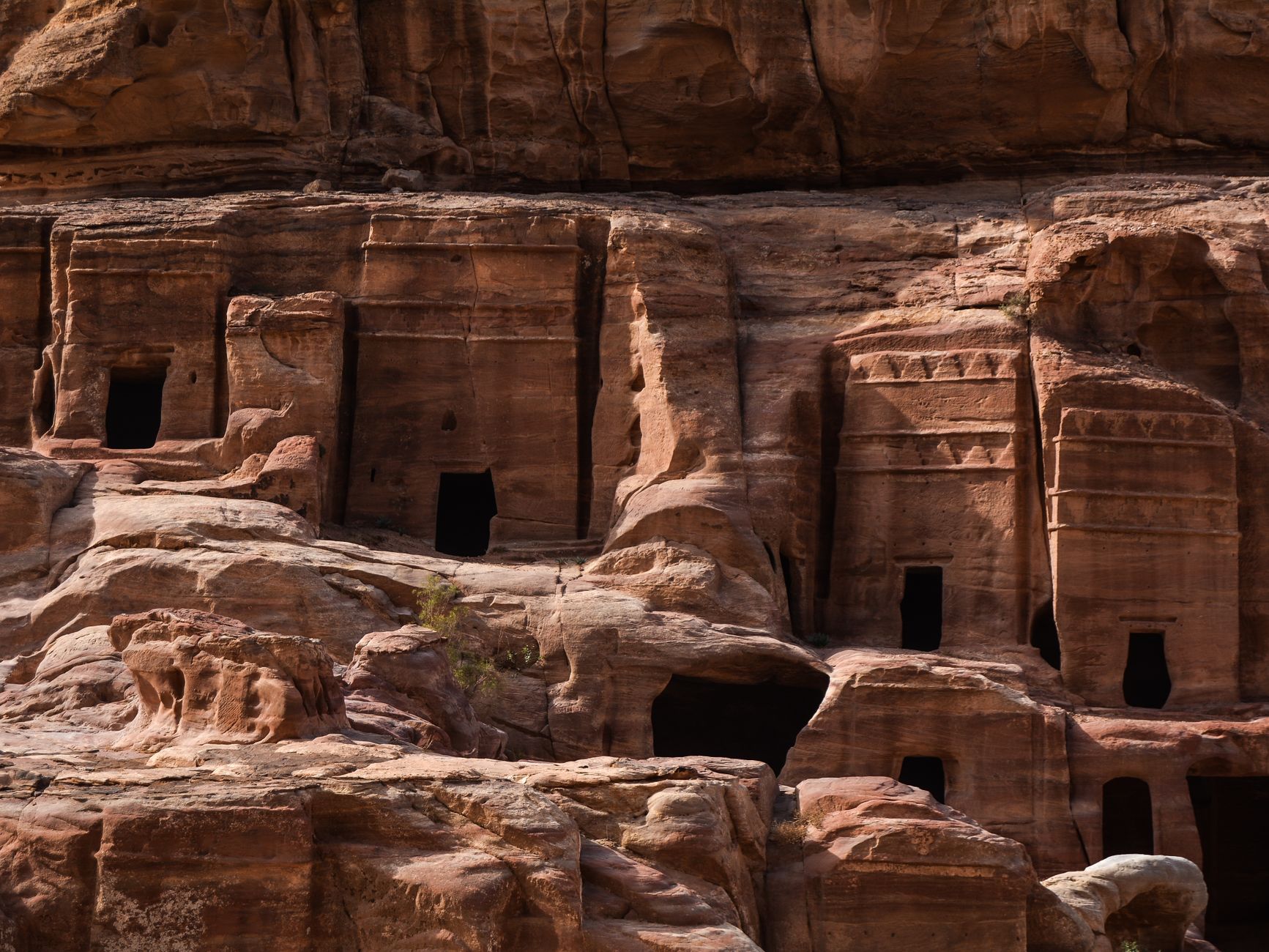
Petra is Jordan's crown jewel and the reason many travellers first consider visiting the country. This ancient Nabataean city, carved into rose-red sandstone cliffs over 2,000 years ago, is one of the world's most spectacular archaeological sites.
The experience begins with a walk through the Siq, a narrow gorge that winds for over a kilometre before revealing Petra's most famous monument: the Treasury (Al-Khazneh). That first glimpse, as the elaborately carved facade emerges from the shadows, is genuinely breathtaking and worth the journey alone.
But Petra is far larger than most visitors realise. Beyond the Treasury lie hundreds of tombs, temples, an enormous theatre, and the towering Monastery (Ad-Deir), reached by climbing 850 rock-cut steps. A full day barely scratches the surface; serious explorers should allocate two days to properly explore the site.
Visit early morning (gates open at 6 AM) to experience the Treasury with fewer crowds and softer light. Wear comfortable walking shoes with good grip — you'll cover several miles on uneven terrain. Hiring a local Bedouin guide enriches the experience significantly, as they share stories and historical context that bring the ruins to life.
Petra essentials:
- Allow at least one full day, ideally two
- Purchase the Jordan Pass online (includes Petra entry and visa fee)
- Start early to avoid crowds and midday heat
- Bring plenty of water and sun protection
- Consider staying in nearby Wadi Musa village
Wadi Rum: Desert Landscapes and Bedouin Camps
Wadi Rum is where Earth most resembles Mars. This vast desert valley, protected as a UNESCO World Heritage Site, features dramatic sandstone mountains, red sand dunes, and rock formations sculpted by millennia of wind and water. It's one of the most visually striking landscapes on the planet.
The best way to experience Wadi Rum is to spend at least one night in a Bedouin camp. These range from basic traditional tents to luxury "Martian" domes with proper beds and private bathrooms. After a day exploring the desert by 4x4 jeep, you'll enjoy a traditional Bedouin dinner cooked underground, then sleep under a canopy of stars more brilliant than most city-dwellers have ever seen.
Activities in Wadi Rum include jeep tours to key sites like Lawrence's Spring, Khazali Canyon (with ancient petroglyphs), and sunset viewpoints from towering rock bridges. More adventurous visitors can try rock scrambling, camel trekking, or hot air ballooning over the desert at dawn.
The silence and scale of Wadi Rum create a profound sense of peace. It's a place to disconnect from modern life and appreciate the stark beauty of the natural world.
Wadi Rum tips:
- Book a camp in advance, especially during peak season (March-May, September-November)
- Choose between basic Bedouin experience or luxury "glamping" camps
- Bring layers — desert nights can be surprisingly cold
- Jeep tours typically last 2-4 hours and can be customised
- Don't miss the sunset from a high viewpoint
The Dead Sea: Floating and Therapeutic Mud
The Dead Sea is a natural wonder and a uniquely relaxing experience. At 430 metres below sea level, it's the lowest point on Earth's surface, and its extreme salinity (nearly 10 times saltier than the ocean) makes floating effortless — you literally cannot sink.
Floating in the warm, buoyant water while reading a newspaper is the classic Dead Sea photo, and it's as surreal and enjoyable as it looks. The mineral-rich waters and black mud are believed to have therapeutic properties, particularly for skin conditions and joint problems, which is why luxury spa resorts line the Jordanian shore.
Most visitors base themselves at one of the resort hotels clustered around the Dead Sea's eastern shore. These range from mid-range chains to five-star properties with extensive spa facilities, multiple pools, and private beach access. A day visit is possible from Amman (about 45 minutes' drive), but staying overnight allows you to enjoy sunset swims and spa treatments.
Important Dead Sea tips:
- Don't shave for 24 hours before swimming — the salt stings fresh cuts
- Avoid getting water in your eyes (it burns intensely)
- Float on your back and don't try to swim normally
- Limit time in the water to 10-15 minutes to avoid skin irritation
- The sea is gradually shrinking — visit while it's still accessible
Amman and Jerash: Ancient Ruins and Modern Culture
Amman, Jordan's capital, is often treated as merely a gateway to Petra and Wadi Rum, but it deserves at least a day of exploration. This hilly city blends ancient Roman ruins with modern Arab culture, offering a glimpse into contemporary Jordanian life alongside historical treasures.
The Roman Theatre in downtown Amman is remarkably well-preserved and still hosts cultural events. Nearby, the Citadel (Jabal al-Qal'a) crowns one of Amman's highest hills, offering panoramic views over the city and housing the ruins of a Roman temple, a Byzantine church, and an Umayyad palace.
Downtown Amman's souks are excellent for shopping without the hard-sell tactics found in some Middle Eastern markets. Look for traditional handicrafts, spices, Arabic sweets, and Dead Sea cosmetics. Rainbow Street in the Jabal Amman neighbourhood offers trendy cafes, art galleries, and restaurants serving modern interpretations of Jordanian cuisine.
An hour north of Amman, the ancient Greco-Roman city of Jerash is one of the best-preserved provincial Roman cities in the world. Walking through the colonnaded streets, grand theatres, and temples gives a vivid sense of life in the Roman Empire. Jerash receives far fewer visitors than Petra but is equally impressive in its own right.
Amman and Jerash highlights:
- Visit the Roman Theatre and Citadel in downtown Amman
- Explore Jerash's colonnaded streets and temples
- Try traditional Jordanian dishes like mansaf and falafel
- Shop for souvenirs in the downtown souks
- Enjoy coffee and shisha in Jabal Amman cafes
Planning Your Jordan Holiday from the UK
Jordan is easier to visit than many travellers assume, with direct flights, straightforward visa processes, and well-established tourist routes that make independent travel simple.
Getting there: Royal Jordanian operates direct flights from London Heathrow to Amman's Queen Alia International Airport (about 5 hours). Indirect options via European or Middle Eastern hubs are often cheaper. The airport is modern and efficient, located 30km south of Amman with taxi and bus connections to the city.
Visa: UK citizens can obtain a visa on arrival for approximately £40-50 (payable in local currency or major currencies). Better value is the Jordan Pass, purchased online before travel, which includes the visa fee plus entry to Petra and 40+ other attractions. The Pass pays for itself if you're visiting Petra for more than one day.
Getting around: Most visitors either rent a car (driving is straightforward on well-maintained highways) or arrange private transfers/tours through hotels or agencies. Public buses exist but are infrequent outside Amman. The distance from Amman to Petra is about 240km (3 hours), Petra to Wadi Rum is 100km (1.5 hours), and Wadi Rum to the Dead Sea is 190km (2.5 hours).
When to visit: Spring (March-May) and autumn (September-November) offer the most comfortable temperatures. Summer (June-August) is extremely hot, particularly in Wadi Rum and the Dead Sea area. Winter (December-February) can be chilly with occasional rain, but Petra and other sites remain open.
Currency and costs: Jordan uses the Jordanian Dinar (JOD), with £1 = approximately 1.8 JOD. ATMs are widely available in cities and tourist areas. Jordan is generally good value, particularly for food and local transport, though tourist site entry fees can add up (hence the Jordan Pass being worthwhile).
Related Reading
You might also be interested in:
Start Planning Your Perfect Holiday
Ready to turn your travel dreams into reality? Our expert travel consultants are here to help you plan a tailor-made holiday that perfectly matches your preferences and budget.
Contact a travel consultant today for personalised advice and exclusive deals you won't find online.
Frequently Asked Questions
Is Jordan safe for UK tourists in 2026?
Yes, Jordan is considered one of the safest countries in the Middle East for tourists. The tourism industry is well-established, and popular sites like Petra, Wadi Rum, and the Dead Sea are secure. As with any travel, stay informed about current FCO travel advice and follow local guidance.
Do UK citizens need a visa for Jordan?
UK citizens can obtain a visa on arrival at Queen Alia International Airport in Amman for a fee (approximately £40-50). Alternatively, you can apply for an e-visa online before travel. If you purchase a Jordan Pass (which includes entry to Petra and other sites), the visa fee is waived for stays of 3+ nights.
What is the best time to visit Jordan?
The best time to visit Jordan is during spring (March-May) or autumn (September-November) when temperatures are mild and comfortable for exploring. Summer (June-August) can be extremely hot, especially in the desert and Dead Sea areas, while winter (December-February) can be chilly with occasional rain.
How many days do I need for a Jordan holiday?
A minimum of 5-7 days allows you to see the main highlights: Petra (1-2 days), Wadi Rum (1 night), the Dead Sea (1-2 days), and Amman or Jerash (1 day). For a more leisurely pace with additional sites like Aqaba or the Dana Reserve, 8-10 days is ideal.
What should I pack for a Jordan holiday?
Pack lightweight, modest clothing that covers shoulders and knees (especially for women), comfortable walking shoes for Petra, sun protection (hat, sunglasses, sunscreen), and layers for cooler evenings. Bring swimwear for the Dead Sea and hotels, and a scarf for visiting religious sites.