Madeira: The Island That Refuses to Be Boring
Let's talk about Madeira.
Because somewhere along the way, this beautiful Portuguese island acquired a rather peculiar reputation.
Mention Madeira and people often picture botanical gardens, organised coach trips, afternoon tea and a lovely hotel overlooking the sea.
And to be fair, Madeira does all of those things rather well.
But if that's all you know about it, you're missing rather a lot.
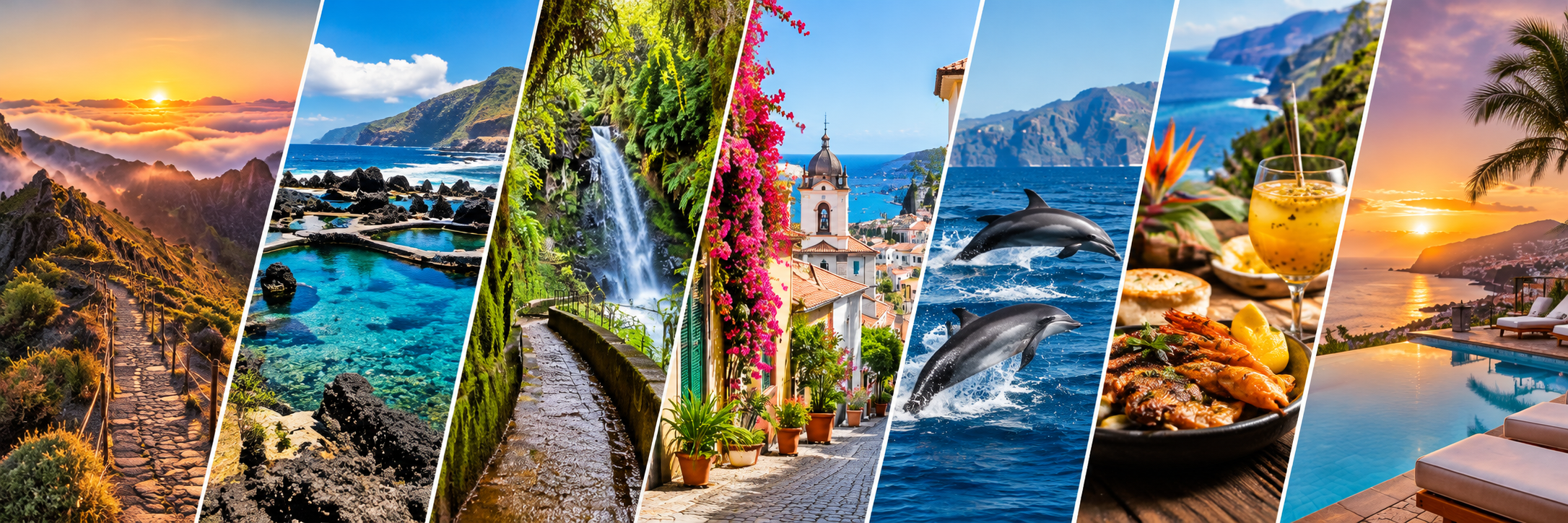
We're talking about an island with dramatic volcanic mountains, waterfalls, ancient forests, natural swimming pools, spectacular coastal roads and an Atlantic Ocean filled with marine life.
An island where you can be above the clouds in the morning, exploring a subtropical forest in the afternoon and enjoying dinner overlooking the ocean by evening.
And yes, you can still have your afternoon tea.
Welcome to Madeira. The island that refuses to be boring.
First Things First: Where Exactly Is Madeira?
Madeira is a Portuguese island in the Atlantic Ocean, southwest of mainland Portugal and off the northwest coast of Africa.
Although it belongs to Portugal, it feels quite different from the Algarve or Lisbon.
Its volcanic origins have created a landscape of steep cliffs, deep valleys, dramatic mountains and lush green vegetation.
And while the island isn't enormous, its geography means that travelling from one place to another can feel like a proper adventure.
It's also surprisingly accessible from the UK.
Direct flights operate from several British airports, including Newcastle, Edinburgh, Manchester and London, with flight times generally around four hours.
Which means you can leave behind a grey British morning and find yourself overlooking the Atlantic before dinner.
Not a bad exchange.
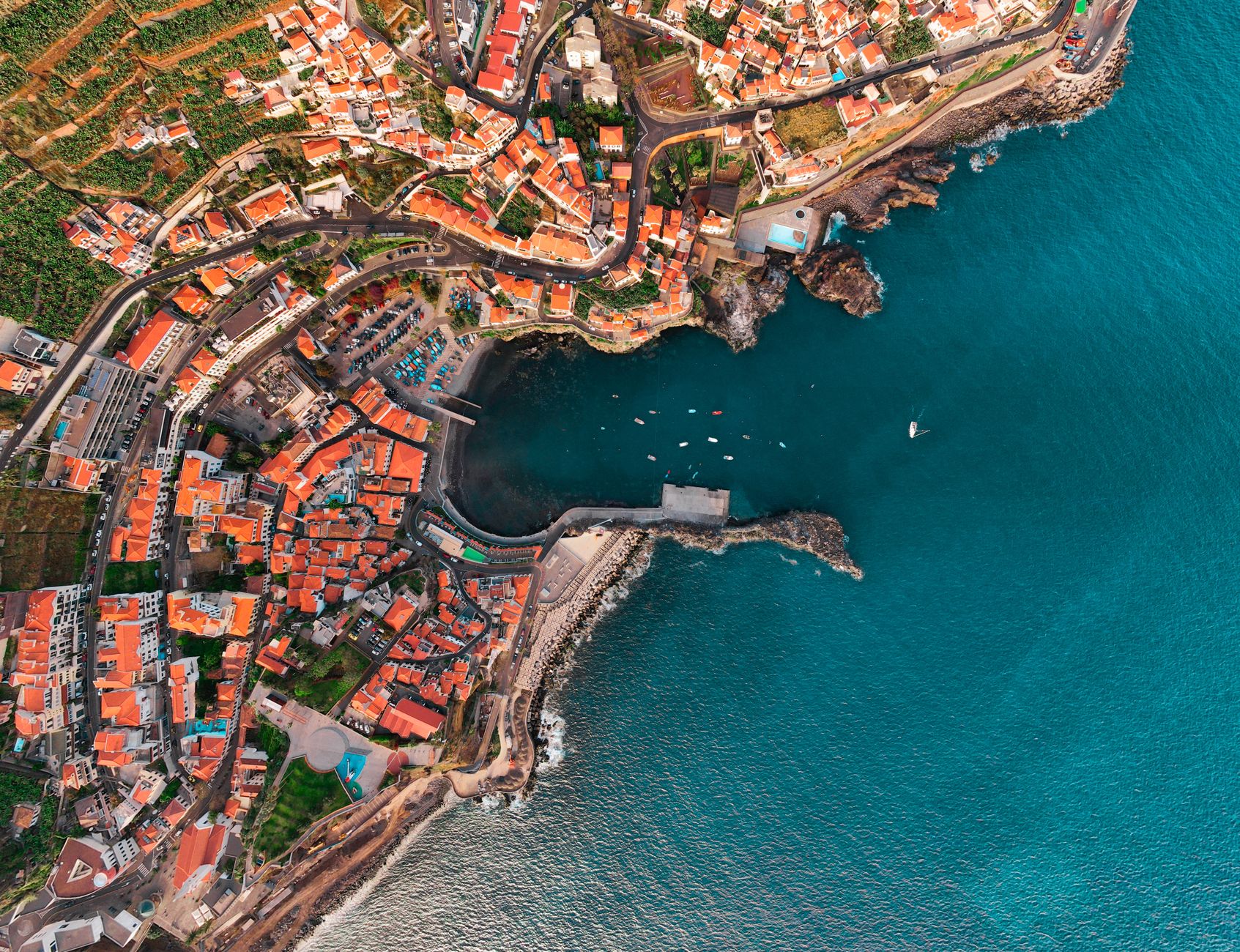 Photo by Nascimento Vieira on Pexels
Funchal: More Than Just a Pretty Harbour
Most visitors begin their Madeira experience in Funchal, the island's capital.
And it's a lovely place to start.
Set against a backdrop of green hills tumbling towards the ocean, Funchal combines traditional Portuguese architecture, colourful markets, historic streets, gardens, restaurants and a beautiful waterfront.
The Old Town is particularly charming, with narrow cobbled streets, little restaurants and painted doors.
There's also the Mercado dos Lavradores, a traditional market known for its flowers, produce and lively atmosphere.
One of Funchal's most memorable experiences is taking the cable car up towards Monte, enjoying the spectacular views across the city and harbour.
And if you're feeling particularly adventurous, there's the famous Monte wicker toboggan ride.
Yes, you really can travel downhill through the streets in a wicker basket.
With two men steering.
On what is essentially a giant sledge without snow.
Because apparently somebody looked at Madeira's steep hills and thought, 'Do you know what this needs? A basket.'
Naturally, it's become one of the island's most famous attractions.
Funchal is also a great base for visitors who want restaurants, shops and things to do within relatively easy reach.
But don't assume the entire island is like the capital.
Because once you leave the city behind, Madeira gets wonderfully wild.
The Mountains: Where Madeira Shows Off
If you've ever seen photographs of dramatic mountain peaks rising above a sea of clouds, there's a good chance you've been looking at Madeira.
The island's mountainous interior is extraordinary.
Pico Ruivo, Madeira's highest peak, reaches approximately 1,862 metres above sea level.
Nearby Pico do Areeiro is another famous viewpoint, offering spectacular mountain scenery.
On a clear day, the views can be breathtaking.
On a cloudy day, you might find yourself standing above the clouds inst
ead.
Either way, it's quite an experience.
But there's something important to understand.
These aren't gentle countryside hills.
Some mountain walks involve steep climbs, exposed sections, narrow paths and significant changes in elevation.
And the weather can change quickly.
So while Madeira is a wonderful destination for walkers, it's important to choose routes appropriate to your experience and fitness.
You don't have to climb a mountain to appreciate the scenery, either.
There are viewpoints and scenic drives that offer incredible landscapes without requiring hiking boots and a heroic level of enthusiasm.
Levada Walks: Madeira's Most Unusual Walking Routes
Now, here's something you might not know.
Madeira has an extensive network of irrigation channels called levadas.
Originally developed to transport water from wetter parts of the island towards agricultural areas, many of these channels now have walking paths alongside them.
And some are absolutely beautiful.
Imagine walking through lush forests, beside flowing water, past waterfalls and through landscapes that feel almost prehistoric.
Some routes are relatively gentle.
Others involve tunnels, steep drops and more challenging terrain.
Which is why it's worth researching the specific walk rather than assuming that anything described as a levada walk is an easy afternoon stroll.
Something especially important for 2026: Madeira's classified walking trails now require advance reservations, and fees generally apply.
You should also check whether your chosen trail is open, restricted or temporarily closed before setting off.
The island's official tourism website provides current trail information and booking guidance.
It's a small detail that could save you from arriving at a beautiful walking route only to discover you can't access it.
 Photo by
 Natural Swimming Pools: Forget the Ordinary Hotel Pool
One of Madeira's most distinctive experiences is swimming in natural volcanic pools.
And they're every bit as dramatic as they sound.
At Porto Moniz, on the island's northwest coast, volcanic rock formations create swimming pools filled with Atlantic seawater.
The surrounding landscape is extraordinary.
Dark volcanic rock.
Bright blue water.
Ocean waves crashing beyond the pools.
It's a completely different experience from swimming in a conventional resort pool.
There are also natural bathing areas around Seixal and elsewhere along the coastline.
However, remember that these are coastal environments.
Conditions can change with the weather and sea state, and access may be restricted when the Atlantic is particularly rough.
Always follow local safety guidance.
And if you're imagining a warm, heated swimming pool, remember that natural seawater pools are exactly that.
Natural.
Nobody has popped the heating on for you.
But Does Madeira Actually Have Beaches?
Yes.
But this is where expectations matter.
Madeira isn't really a classic endless-sandy-beach destination in the same way as parts of Spain, Greece or the Caribbean.
Much of the coastline is rocky, with dramatic cliffs, pebbly beaches and volcanic formations.
There are sandy beaches, including the striking dark sands of Seixal and the man-made sandy beaches at places such as Machico and Calheta.
But if your ideal holiday involves miles of soft golden sand directly outside your hotel, you need to choose your location carefully.
And here's a lovely little twist.
The wider Madeira archipelago includes Porto Santo, a neighbouring island famous for its long golden sandy beach.
It's a very different landscape from Madeira itself.
So, if you love the idea of exploring Madeira but also want a proper beach experience, combining the two islands could be a wonderful option.
Whale Watching, Dolphins and Life Beneath the Atlantic
Now we're talking.
Madeira's position in the Atlantic makes it a wonderful destination for people who love the ocean.
Dolphins and several species of whales can be encountered in the surr
ounding waters, and boat excursions offer opportunities to observe marine wildlife.
Of course, these are wild animals, so sightings can never be guaranteed.
And that's exactly how it should be.
Choose responsible operators who follow appropriate wildlife-watching practices, keep a respectful distance and prioritise the animals' wellbeing.
Madeira also offers diving, snorkelling, kayaking and other ocean-based activities.
The island's underwater volcanic landscape provides a different environment from the sandy-bottomed Mediterranean destinations many travellers are familiar with.
For anyone who loves the sea, there's plenty to explore.
And for anyone who doesn't fancy getting wet?
A boat trip with beautiful coastal scenery and the possibility of seeing dolphins sounds like a rather lovely afterno
on.
Where Should You Stay in Madeira?
This is one of the most important decisions when planning a Madeira holiday.
Because different parts of the island offer quite different experiences.
Funchal: Best for Restaurants, Sightseeing and Convenience
Funchal is a great choice if you want a mixture of sightseeing, restaurants, shopping and organised excursions.
You'll find everything from boutique accommodation to larger hotels with pools and ocean views.
It's particularly appealing for couples and first-time visitors.
Caniço: Quieter Coastal Stays
East of Funchal, Caniço offers a more relaxed atmosphere, with coastal hotels and lovely sea views.
It can work well for visitors who want a quieter base while remaining within reach of the capital.
Calheta: Sunshine and a Slower Pace
On the southwest coast, Calheta is popular for its comparatively sunny conditions, marina and sandy beach.
It's worth considering if you prefer a quieter resort-style holiday.
Porto Moniz and the North Coast: For Dramatic Scenery
If waking up to rugged coastline, mountains and spectacular landscapes appeals more than being surrounded by restaurants and nightlife, the north coast could be wonderful.
But it isn't necessarily the most convenient base for every traveller.
The Raia takeaway?
Don't choose a Madeira hotel based on photographs alone.
Think about whether you want to walk to restaurants, explore independently, spend time by a pool or wake up somewhere beautifully remote.
The right hotel in the wrong location can make a holiday unnecessarily complicated.
Do You Need to Hire a Car?
Not necessarily.
If you're staying in Funchal and planning to use organised excursions, airport transfers, taxis or local buses, you can enjoy Madeira without hiring a car.
But if you want to explore remote viewpoints, small villages and different parts of the island at your own pace, a hire car can be very useful.
There's just one little detail.
Madeira is steep.
And I mean properly steep.
Some roads involve tight bends, tunnels, dramatic climbs and narrow streets.
If you're not a confident driver, particularly on mountain roads, there's absolutely no shame in leaving the driving to somebody else.
After all, you're supposed to be on holiday.
Not auditioning for a rally championship.
Let's Talk About the Food
Madeira has some wonderful traditional dishes, and food is a big part of the island's appeal.
One of the most famous is espetada, traditionally chunks of beef seasoned with garlic and salt, cooked on skewers.
Then there's bolo do caco, a delicious round bread commonly served warm with garlic butter.
Honestly, that alone is reason enough to investigate the island.
You'll also find fresh fish and seafood, including tuna and the famous black scabbardfish, which is sometimes served with banana.
Yes, banana.
And before you raise an eyebrow, remember that some of the world's best dishes involve combinations that sound a little peculiar until you taste them.
Another local speciality is milho frito, fried cornmeal, often served alongside meat dishes.
For dessert, look out for traditional honey cake, locally grown fruit and sweet treats influenced by Madeira's long culinary history.
Vegetarians will find options, especially in Funchal and larger hotels, although traditional menus can be quite meat- and fish-focused.
If you have dietary requirements, it's worth checking menus in advance rather than assuming every restaurant will offer a wide selection.
 Photo by Eva Bronzini on Pexels
And What About the Drinks?
Well, we can't discuss Madeira without mentioning Madeira wine.
This fortified wine has been produced on the island for centuries and comes in different styles, from dry to sweet.
It's an important part of Madeira's history and culture.
But there's another local drink worth knowing about.
Poncha.
Traditionally made using sugarcane spirit, honey and citrus juice, poncha is one of Madeira's best-known drinks.
There are also variations using fruits such as passion fruit.
It might look innocent enough in a little glass.
But don't underestimate it.
That is not simply a refreshing fruit juice with ambitions.
For visitors who enjoy trying local food and drink, Madeira offers plenty of opportunities.
And unlike destinations where alcohol availability varies considerably between hotels and restaurants
, licensed bars and restaurants serving alcohol are commonplace in Madeira.
Madeira's Weather: Four Seasons in One Day?
Madeira is often described as an island of eternal spring.
And there's a good reason for that.
Its subtropical climate means temperatures are generally mild throughout the year.
Winter coastal temperatures are often in the mid-to-high teens, while summer c
onditions are commonly in the low-to-mid twenties Celsius.
But the really interesting thing is Madeira's microclimates.
The south coast may be enjoying sunshine while the mountains are wrapped in cloud.
The north coast can be wetter and greener, while other areas are comparatively dry.
You can experience surprisingly different conditions during a single day.
So, if you're heading into the mountains, pack an extra layer and a waterproof jacket even if the weather at your hotel looks beautiful.
And if you're booking Madeira for winter sunshine, think pleasantly mild rather than guaranteed hot beach weather.
It's an excellent destination for exploring outside summer, but not necessarily the place to expect 30°C temperatures in January.
Is Madeira Suitable for Families?
Absolutely — but it depends on the kind of family holiday you're looking for.
If your family enjoys exploring, boat trips, swimming, outdoor activities, nature and discovering new places, Madeira can be fantastic.
Older children and teenagers may particularly enjoy the adventurous side of the island.
There are also family-friendly hotels with swimming pools and facilities for younger guests.
However, if your ideal family holiday involves a huge sandy beach, endless waterslides and an enormous all-inclusive resort, Madeira might not be the most obvious first choice.
That doesn't make it unsuitable for families.
It simply means matching the destination to the family.
And that's something I think gets overlooked far too often when people book holidays.
When Is the Best Time to Visit?
The lovely thing about Madeira is that it works throughout the year, although d
ifferent seasons suit different holidays.
Spring is especially appealing for gardens, flowers, greenery and walking.
Summer generally brings warmer conditions and opportunities to enjoy the coast and ocean.
Autumn can be wonderful for exploring, with mild weather and beautiful scenery.
Winter offers a welcome escape from the British cold, although you'll still want layers and realistic expectations about swimming and sunshine.
Madeira is also known for its festive celebrations, particularly the Christmas and New Year period in Funchal.
So there's no single perfect month.
It depends on what you want from your trip.
A Few Practical Things Worth Knowing
Currency: Madeira uses the euro.
Language: Portuguese is the official language. English is widely used in tourist areas, but a simple olá or obrigado/obrigada is always a nice touch.
Time difference: Madeira uses the same clock time as the UK throughout the year.
Airport transfers: Funchal is generally around 20–25 minutes from the airport by road, depending on traffic and your exact accommodation.
Passports and visas: British citizen passport holders can normally visit Portugal, including Madeira, without a visa for up to 90 days in any 180-day Schengen period. Your passport must generally have been issued less than 10 years before arrival and remain valid for at least three months after your planned departure from the Schengen area.
Border checks: The EU Entry/Exit System is being introduced, so allow for additional border formalities where applicable.
Walking routes: In 2026, official classified trails require advance reservations and generally carry an access fee. Check current trail conditions and rules before setting out.
Travel insurance: If you're planning hiking, diving or other adventure activities, make sure your policy covers what you're actually doing.
Accessibility: Madeira's steep terrain can present challenges for travellers with reduced mobility. Look closely at hotel locations, gradients and excursion accessibility before booking.
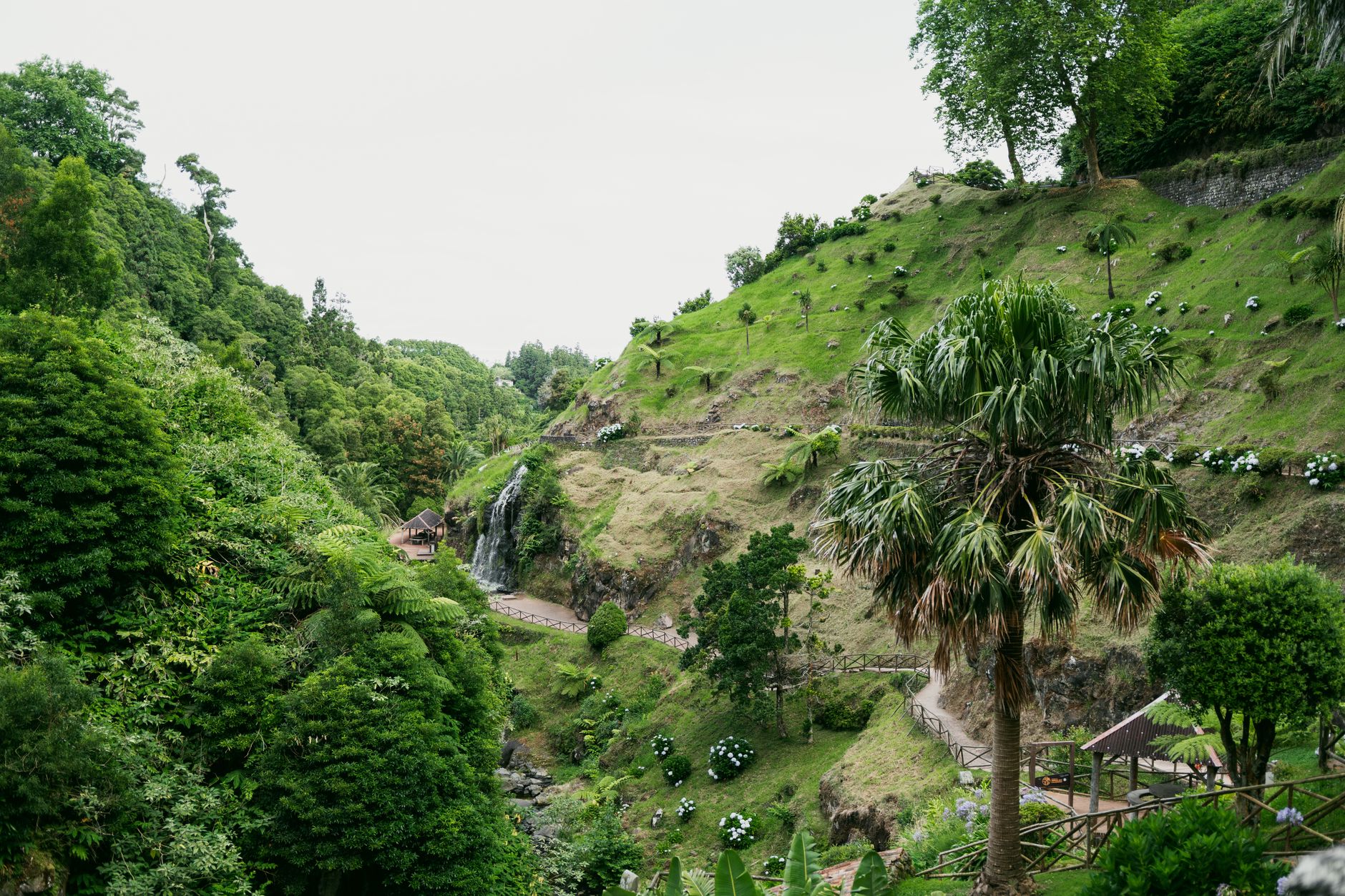 Photo by William Choquette on Pexels
So, Is Madeira Worth Visiting?
I think Madeira is one of those destinations that deserves a fresh look.
Because it offers something a little different.
It's not trying to be the Algarve.
It's not trying to be the Canary Islands.
And it's certainly not just a place for botanical gardens and afternoon tea.
It's a destination for travellers who love dramatic scenery, beautiful landscapes, interesting food, the ocean and the freedom to explore.
It's somewhere you can be adventurous in the morning and thoroughly lazy in the afternoon.
Somewhere you can spend a day walking through ancient forests and the next beside a swimming pool overlooking the Atlantic.
And somewhere that might just surprise you.
So, if you've always dismissed Madeira as somewhere you'd visit 'when you're older', perhaps it's time to think again.
Because this island has rather a lot of life in it.
And it certainly isn't boring.
Thinking about discovering Madeira? Whether you're planning a scenic escape, a relaxing hotel stay or an adventure-filled holiday, Raia Travel can help you find the right part of the island, the right accommodation and the right departure airport.
Raia Travel - Travel simple. Discover more.