Greece and Greek Islands Holidays from the UK: Santorini, Mykonos and Crete Guide for 2026
Greece and Greek Islands Holidays from the UK: Santorini, Mykonos and Crete Guide for 2026
Greece is one of those destinations UK travellers come back to again and again, and it isn't hard to see why. You get ancient history, clear Aegean water, whitewashed hill villages and food worth travelling for, all within about four hours of the UK. Santorini has the sunsets, Mykonos has the energy and Crete has the variety, and that is before you reach the dozens of smaller islands most people never get to.
This guide runs through the islands worth your time in 2026, the practical questions UK holidaymakers ask most often, and how to put together an island-hopping trip that does not leave you worn out.
Why choose Greece and the Greek islands for 2026
Greece is one of the easier Mediterranean trips to organise from the UK. Direct flights run from most major airports to Athens, Santorini, Mykonos, Crete, Rhodes and Corfu, and the weather is dependable from May through October. That long, reliable season is a big part of the appeal, with beach days, sightseeing and late dinners outdoors close to guaranteed.
It also tends to be better value than a lot of European beach destinations. You can stay in a boutique cave hotel in Santorini or a family resort in Crete, and eating out stays affordable once you step away from the busiest tourist strips. The welcome you get is genuine, and it is a big reason people rebook.
Santorini: sunsets and volcanic landscapes
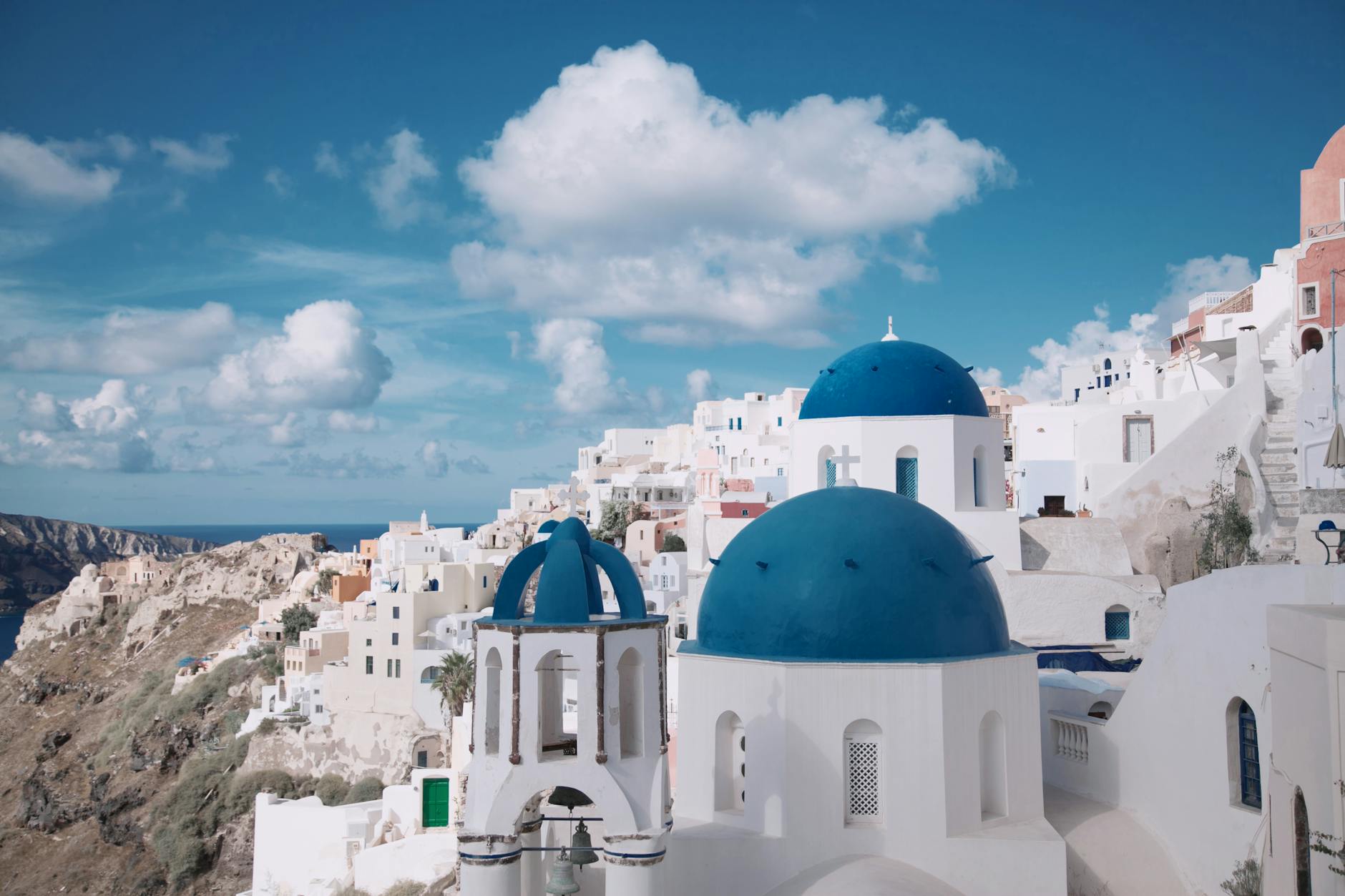
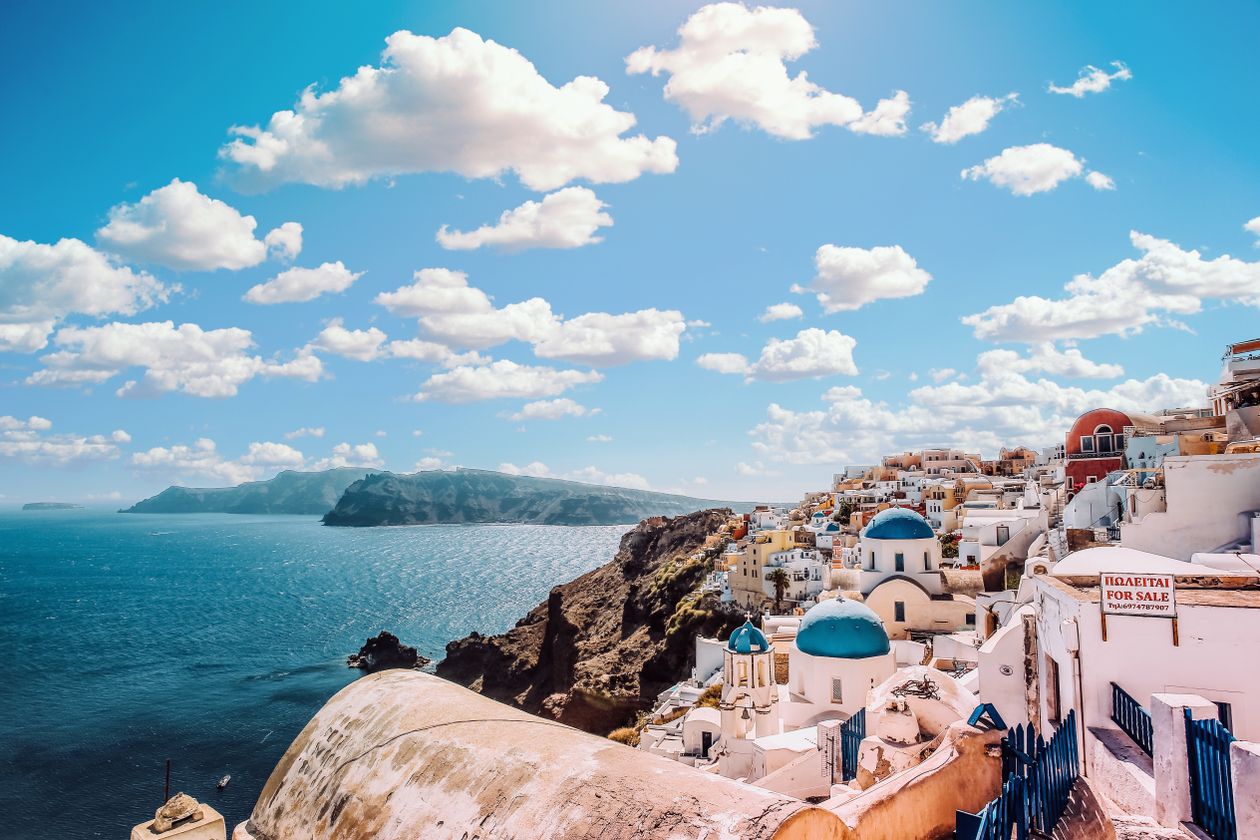
Santorini is the most photographed island in the Cyclades, and the caldera is the reason. A volcanic eruption thousands of years ago left a vast flooded crater, and the villages of Oia, Fira and Imerovigli sit right on its edge. It is a couples' island first and foremost: cave hotels, infinity pools and dinner as the sun drops behind the rim.
There is more to it than the view, though. You can taste wine from vineyards grown in volcanic ash, walk the excavated Bronze Age town at Akrotiri, and swim off beaches with red, black or white sand. Direct flights from the UK run seasonally, or you fly via Athens and pick up a short onward connection.
If you are marking a special occasion, a luxury honeymoon package with private transfers, a sunset catamaran trip and cliffside dinner reservations takes the planning off your hands.
Mykonos: beaches and nightlife
Mykonos is the social island. It is known for its beach clubs, its boutiques and a nightlife that genuinely earns its reputation. During the day people settle in at places like Nammos and Scorpios; in the evening the action moves into Mykonos Town, where the lanes twist between whitewashed houses, bougainvillea spills over the balconies and the waterfront tavernas serve the day's catch.
It works for more than party-goers. Families head for the calmer beaches at Ornos and Platis Gialos, while Paradise and Super Paradise draw the crowd that wants DJs and cocktails. For something completely different, take the short boat across to Delos, one of the most important archaeological sites in Greece and, in myth, the birthplace of Apollo.
You can reach Mykonos on direct seasonal flights or connect through Athens. July and August bring the highest prices and the biggest crowds, so May, June or September give you better value and a calmer island.
Crete: variety and family-friendly adventures
Crete is the biggest Greek island, and it has the most range when it comes to landscapes, things to do and places to stay. You can go from the pink sand at Elafonissi to the long walk through the Samaria Gorge, from the Venetian harbour at Chania to the Minoan palace at Knossos. It rewards anyone willing to get off the sunlounger.
Families do particularly well here. The beaches are safe and shallow in plenty of spots, there are water parks, and the historical sites hold the attention of children and adults alike. Because the island is so big, you can settle in one resort and take day trips, or split your time between the busier north coast around Heraklion and Chania and the quieter, more traditional south.
Direct flights run to Heraklion and Chania from May through October. All-inclusive resorts are good value for families, and the boutique hotels in Chania's Old Town give you something more characterful. For more ideas, see our guide to family winter sun destinations.
Island-hopping: building your itinerary
Half the fun of a Greek holiday is moving between islands, and the ferry network makes it easy. A classic fortnight might run three nights in Santorini, four in Crete, three in Mykonos, then a couple in Athens for the Acropolis and the old centre.
Ferries range from high-speed catamarans that cover the gap in two to three hours to slower overnight crossings. Book ahead in peak season and check the timetables, because sailings thin out once summer ends. Domestic flights link the bigger islands too, which is worth it on a shorter trip.
Routing matters more than people expect. Some islands connect well and others do not, and doubling back eats into your week. A specialist travel consultant can line up the accommodation, transfers and ferry tickets in the right order, so you are not booking on the hoof.
Best time to visit Greece and the Greek islands
The season is long, but when you go changes both the trip and the bill. May and June give you warm, settled weather around 25 to 30°C, thinner crowds and lower prices, which suits sightseeing, walking and the beach before the real heat arrives. September and early October are much the same, with the sea still warm from summer.
July and August are the peak. Hotels and flights cost the most, Santorini and Mykonos get very busy, and the thermometer can push past 35°C. If those are your only dates, book early and think about quieter islands like Naxos, Paros or Milos.
Out of season, a lot of island hotels and restaurants close from November to March, though the larger islands like Crete and Rhodes keep going year-round. Athens is a good city break at any time of year.
Practical tips for UK travellers
UK passport holders do not need a visa and can stay up to 90 days in any 180-day period. Check your passport has at least six months left from your travel date. Greece is on the Euro, and ATMs are easy to find on the main islands, though banking can be patchy on the smaller ones.
Travel insurance is not optional. Pick a policy that covers medical costs, cancellation and anything active you have planned, such as water sports or hiking. Booking through an ATOL-protected travel provider also keeps the money side of your holiday secure.
English is widely spoken where the tourists are, but a few words of Greek go down well. A "kalimera" in the morning or an "efharisto" as you leave the taverna is always noticed.
Frequently asked questions
Which Greek island is best for first-time visitors?
Crete is the best first taste of Greece. You get good beaches, a lot of history, solid infrastructure and accommodation to suit most budgets, and it is big enough to fill a week or two without rushing.
How long does it take to fly from the UK to the Greek islands?
Direct flights from the UK to Athens take around 3.5 to 4 hours. Santorini, Mykonos, Crete (Heraklion) and Rhodes are roughly 4 to 4.5 hours direct. Going via Athens adds one to two hours depending on the connection.
Is it cheaper to book a package holiday or arrange everything separately?
Packages often work out better, especially in peak season, because operators buy flights and hotels in bulk. That said, a tailor-made itinerary through a specialist can give you more flexibility and still come in at a competitive price.
Can I island-hop without pre-booking ferries?
You can, but it is risky in July and August when ferries sell out. In May, June and September you can usually book a day or two ahead. Pre-booking saves the worry and tends to get you the better departure times.
Are the Greek islands suitable for families with young children?
They are a strong choice. Crete, Rhodes and Corfu have safe beaches, family resorts and plenty to keep children busy, with kids' clubs, shallow pools and interconnecting rooms common. Greek tavernas and public life are very welcoming to children.
Ready to plan your Greek Islands holiday? Contact a specialist travel consultant who can design a tailor-made itinerary, secure the best flights and accommodation, and handle the details so you can focus on the trip itself. Call us today on 0333 335 5265.